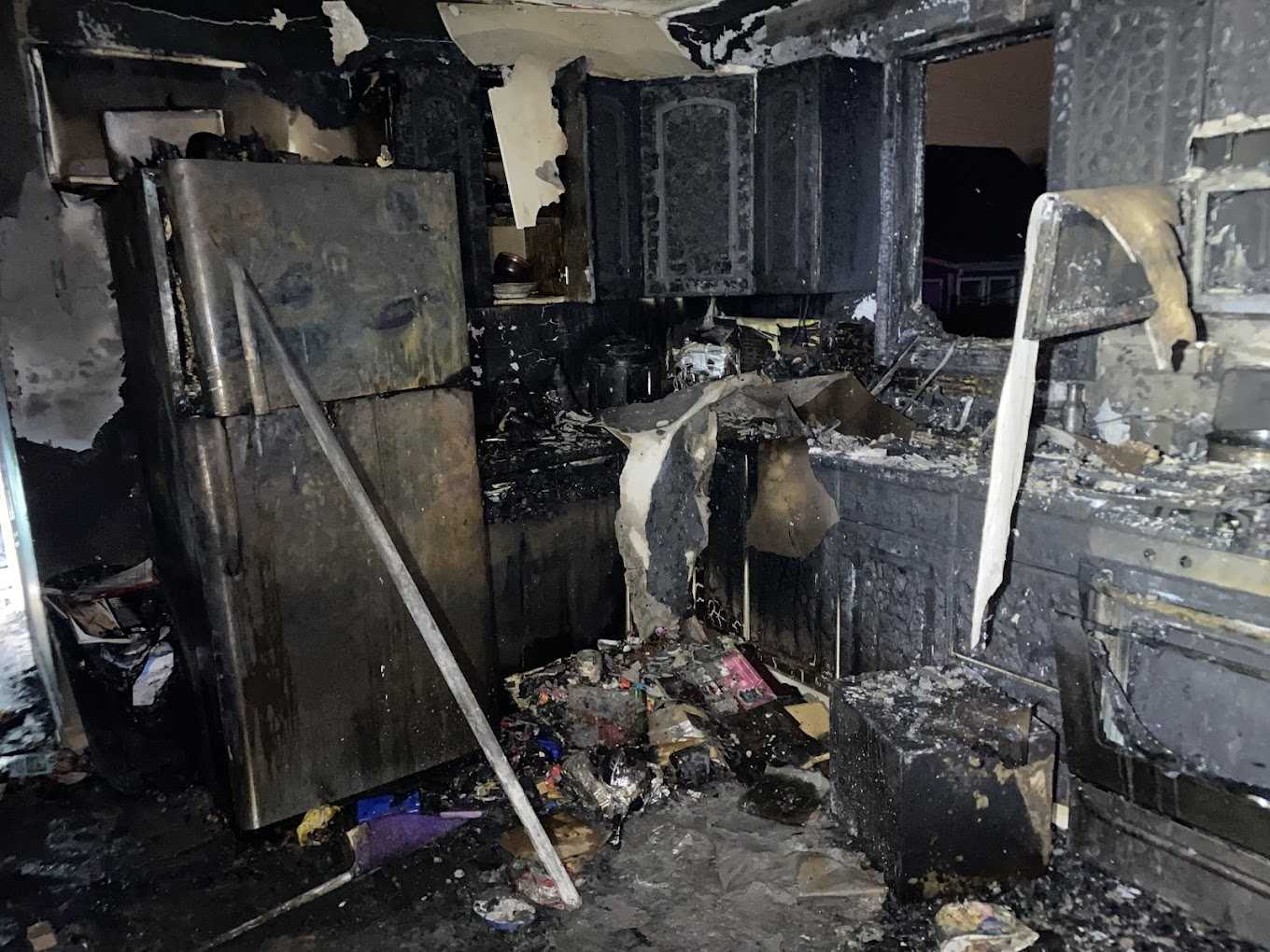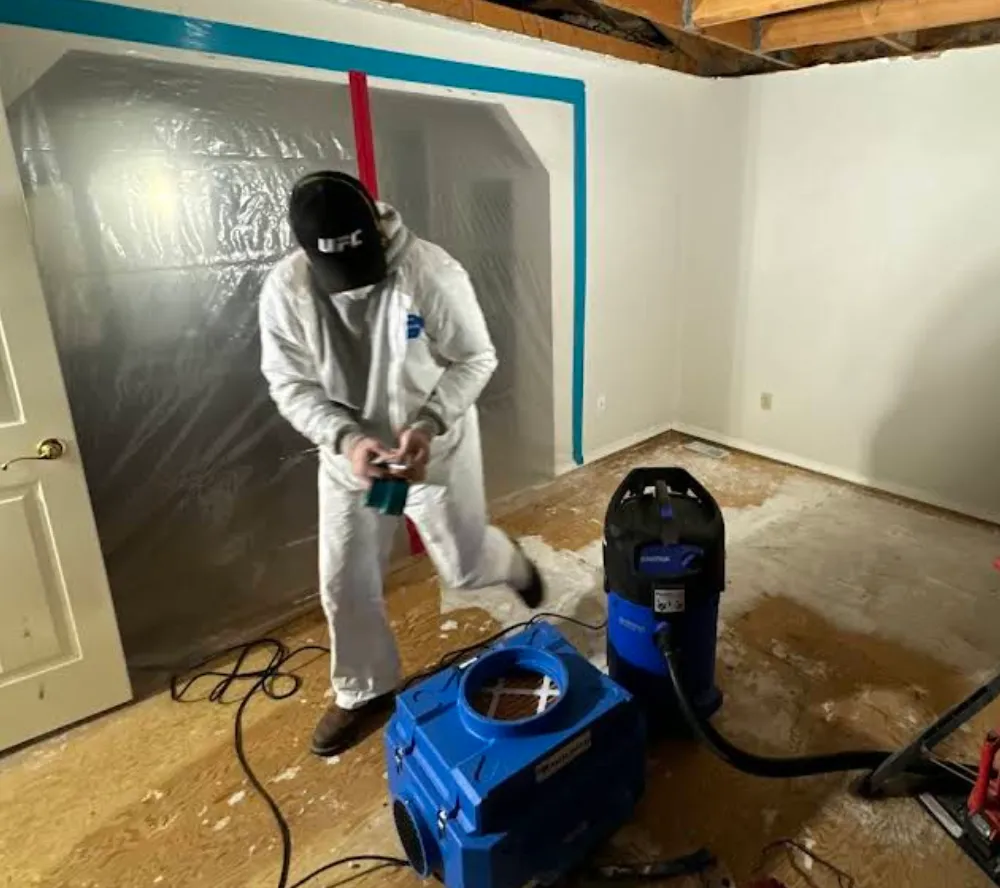
"Fire damage" describes several different kinds of harm that happen at the same time. A single kitchen fire can char cabinets, warp the refrigerator door, coat the upstairs hallway in residue, corrode bathroom fixtures and soak the subfloor with water from the hose line. Recognizing each type helps explain why fire restoration includes so many different tasks.
1. Direct Flame Damage
Materials that actually burned are charred or consumed. Charred wood has lost material and strength, and charred finishes cannot be cleaned back to their original condition. This damage is usually limited to the room or area where the fire burned, and it is almost always a removal-and-replacement item.
2. Heat Damage
Heat travels farther than flame. It can melt plastic light fixtures and outlet covers, warp vinyl window frames, blister paint, crack glass and soften adhesives in rooms that never saw flame. Heat damage is easy to miss in a quick walkthrough, so it is checked room by room.
3. Smoke Residue
Smoke residue differs based on what burned and how hot the fire was, and the differences matter for cleaning:
- Dry, powdery residue: typically from fast, hot fires burning paper or wood; it tends to be easier to remove.
- Wet, sticky residue: from slow, smoldering fires and burning plastics or rubber; it smears and needs different methods.
- Protein residue: from burned food; it can be nearly invisible yet produce a strong, persistent odor and discolor paint.
- Fuel oil residue: from furnace puff-backs; it is thick, dark and greasy.
Our article on why smoke and soot can be more damaging than flames covers how residue spreads through a home.
4. Corrosion and Etching
Some combustion residues are acidic. Left on metal, glass, grout and stone, they can tarnish, pit and etch surfaces over time. This is one reason residue on fixtures and electronics is addressed early rather than at the end of the project.
5. Odor
Smoke odor comes from residue that has settled on and absorbed into materials, including insulation, wall cavities and ductwork. It is a type of damage in its own right because it can persist after visible cleaning is done, and it requires its own treatment once residue has been removed.
6. Water Damage From Suppression
Firefighting can leave large amounts of water behind, often in rooms the fire never reached. Wet materials need drying or removal, and the combination of residue and moisture can complicate cleaning.
7. Fire Extinguisher Residue
Dry chemical extinguishers leave a fine powder that can be corrosive to some surfaces and electronics. It needs careful cleanup rather than simply sweeping.
8. Structural Damage
Fire can weaken framing, trusses and connections, and firefighting may involve ventilating the roof or opening walls. Structural damage requires evaluation by qualified professionals before repair.
How the Types Combine
A typical residential fire produces several of these at once, in layers that move outward from the fire: flame damage at the origin, heat damage around it, smoke residue and odor throughout, and water damage wherever suppression reached. A restoration plan addresses each layer with the method suited to it.
Fire Damage Type FAQs
Why does my house smell like smoke in rooms that look clean?
Odor residue can be invisible and can settle in places like ductwork, insulation and closets. It usually needs targeted cleaning and deodorization.
Is heat-damaged glass a safety concern?
Heat-cracked or stressed glass can break unexpectedly. Have windows and glass doors in affected areas evaluated.
Can electronics with soot on them be saved?
Sometimes, but residue can be corrosive and damage may develop over time. Do not power them on until they have been checked.
Related Services & Guides
Not sure what kind of damage your property has after a fire? Call Northwest Restoration at (206) 707-4960.
Call Us Now (206) 707-4960